Connecting Claude to Salesforce MCP: Transforming Business Operations with AI-Powered Intelligence
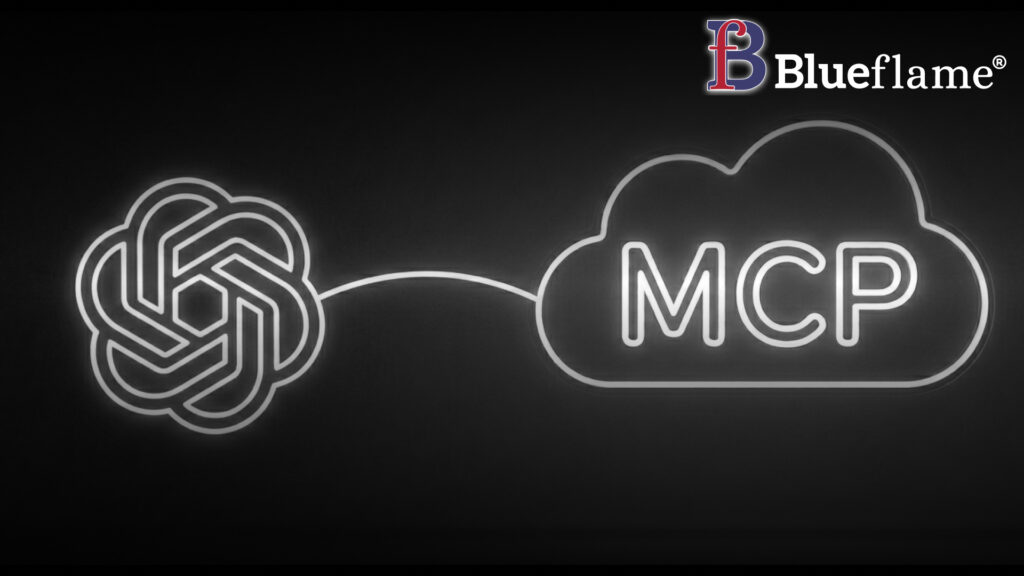
The Connecting Claude to Salesforce MCP is revolutionizing the interaction of business users, Salesforce architects, and administrators with CRM data, metadata, and the advanced capabilities of AI.
The impact of Artificial Intelligence on the business world is undeniable. Companies have to innovate and outpace the competition. Traditional automation methods no longer facilitate business growth. Companies have started adopting business-oriented intelligent assistants that offer insights and facilitate the completion of everyday business functions.
The Connecting Claude to Salesforce MCP is at the forefront of these innovations. This integration empowers companies to fully utilize Salesforce data coupled with advanced AI for better customer interactions, decisions, analyses, and overall business process effectiveness.
The AI-oriented investments of companies have accelerated in recent years. It is important for business leaders and IT personnel of these companies to understand how Salesforce MCP with Claude (Salesforce MCP, AI models, and intelligent assistants) may help them build converged advanced digital ecosystems within enterprises.
What is MCP (Model Context Protocol)?
Model Context Protocol (MCP) is a standardized framework that integrates AI tools and business systems in a secure manner.
Historically, the integration of AI tools with enterprise systems was a tedious process that required extensive coding and sustained support over time. With the adoption of MCP, the integration of AI systems with enterprise platforms can be accomplished in a secure manner with minimal effort.
MCP enables organizations to set up a systematized link to offer AI Models access to required enterprise information without the need to create separate integrations for each AI tool and each enterprise application.
MCP enhances scalability, accelerates the adoption of AI tools within an organization, and simplifies the integration process.
Understanding the Relationship Between Claude and Salesforce
Claude is a highly sophisticated AI assistant that can comprehend and process natural language, perform advanced analytics, generate text, and help with challenging business-related activities. Salesforce is an all-inclusive application for customer relationship management and the management of sales, services, marketing, and business information.
Once Claude is connected to Salesforce MCP, she will become more contextually aware of Salesforce information and processes. Consequently, she will be able to respond accurately and, more importantly, intelligently and constructively, based on real business information rather than responding to queries based on generalizations.
Once connected, Claude can really bring SOQL queries to life and articulate metadata, the installed packages, and the relationships between objects, while allowing natural English interaction with your Salesforce org from the terminal. Instead of jumping back and forth from Setup, the Developer Console, reports, and searching the documentation, users can ask questions like these:
“List our top-performing accounts by revenue and identify cross-sell opportunities.”
“Provide an executive summary of sales performance, pipeline health, and forecast accuracy for this quarter.”
“Show me the top opportunities expected to close this quarter and identify any at-risk deals.”
“Show me all custom objects in this org.”
“List profiles with Modify All Data permission.”
“What managed packages are installed?”
Utilizing a conversational format saves a great deal of time when trying to gather insights related to business forecasting and productivity and when dealing with challenges that require the comprehension of a convoluted Salesforce interface. It creates a much smarter and more productive environment, allowing users to work with Salesforce data using natural language while also receiving contextual AI insights and recommendations.
Agentic AI also goes a step further and automatically analyzes Salesforce and suggests the next best actions for opportunities or risks, assisting in the transition of businesses from a reactive state of automation to a more intelligent, proactive automation.
Why Businesses Are Adopting the Claude and Salesforce Integration
Within the modern business environment, organizations have to manage thousands upon thousands of customer and operational interactions. These require extensive reports and workflows within an overly complicated CRM. All of these rapidly rising client demands have stretched resources thin. It often takes too long to gain even basic insights, resulting in further loss of productivity.
Claude integrated with Salesforce builds AI workflows to further supplement operational efficiencies and better-informed business decisions. Users no longer must sift through Salesforce dashboards, reports, and logs. Instead, users can pose questions to Claude in natural language and receive responses that are contextual to the Salesforce data. This system provides an easy-to-use interface that allows companies to optimize and leverage their Salesforce investment.
Key Use Cases for Salesforce Architects
Salesforce architects, administrators, consultants, and technical team members managing complex Salesforce orgs will find the Claude and Salesforce MCP integration extremely beneficial. Claude can further assist these teams by querying Salesforce org data, interpreting Salesforce org metadata, analyzing Salesforce org configurations, and reporting these findings in natural language. This can reduce the overall effort required for numerous tasks like architecture reviews, governance, and even troubleshooting.
Sales Pipeline and Revenue Insights
Salesforce admins, sales team members, and account managers can pose numerous questions in natural language that will assist with the sales pipeline for the quarter.
“What will sales look like this quarter?”
“What deals are at risk, and what should I do about it?”
Claude will be able to sift through Salesforce opportunity data and provide summaries regarding sales pipeline, forecast revenue, and assess the risk of deals to provide gainful insights.
Customer Service and Support Analytics
Leadership in customer support can quickly assess support performance by asking questions such as
“What issues do customers contact support with?”
“Which customers have the most open support requests?”
Claude can help support teams by interpreting support case data to identify trending issues and service gaps and support teams in improving response times, customer satisfaction, and service challenges.
Documentation and Data Dictionary Generation
Claude makes Salesforce documentation easier to maintain and less labor-intensive. Instead of collecting and inputting the details yourself, you can now ask Claude the following:
“Describe every custom object, field, and relationship in this org and generate a data dictionary.”
By interpreting metadata, Claude generates Salesforce documentation in a structured format. This documentation maintains consistent records of Salesforce architecture. The documentation decreases manual documentation, speeds up architecture reviews, enhances governance and compliance, and helps to ensure that technical documentation is up to date.
Data Analysis and Org Health Assessment
Evaluating Salesforce data typically demands deep reporting and data analysis. Claude empowers architects to say the following:
“Analyze the Salesforce org and generate a summary report. For each object, calculate the percentage of populated (non-null) fields across all records.”
Claude assesses data completeness, finds fields that are not being fully leveraged, and offers suggestions for maximizing the field’s potential. This greatly helps in supporting data quality and reporting efforts.
Security and Org Audits
Security reviews are mostly manual checks of profiles, permissions, and access. Teams can now instruct Claude to say the following:
“List all profiles with Modify All Data permission.”
These results are now prompt and help to find permissions that pose the greatest risk. This improves the efficiency of security reviews and audits, and assesses the adequacy of security structures.
Employee Onboarding and Knowledge Transfer
Understanding a sophisticated Salesforce implementation can take new employees many weeks. Alternatives to accessing documentation or Setup can be used. This includes asking Claude questions regarding Salesforce org structure, objects, automation, and business processes. This practice improves knowledge sharing and reduces reliance on more experienced team members, and builds on Salesforce best practices adoption.
Debugging and Impact Analysis
Troubleshooting Salesforce customizations can be a hurdle, especially for large enterprise environments. Claude’s capabilities can help developers and architects identify automation impacts, coverage for triggers, and analyze Flow dependencies. Furthermore, Claude’s capabilities can help teams identify field references, perform root-cause analysis, and reduce the overall time spent troubleshooting. Claude’s capabilities can help teams improve the overall release planning and change impact analysis.
Metadata Discovery and Org Exploration
Typically, Salesforce consultants, architects, and administrators have to spend time getting familiar with a new environment. Claude allows users to rapidly gain visibility into the Salesforce org. Of its many capabilities, Claude can help users describe custom fields and objects, discover managed packages, and discover integrations. Claude may aid teams in improving the learning curve and estimations for project completion.
The Future of AI-Powered CRM
Introducing AI assistants to CRM systems has begun the next major evolution and innovation for businesses. Business systems will be able to adapt to human business and system interactions rather than forcing users to learn more intricate systems.
MCP is accelerating this transformation by providing a standardized framework that lets enterprise systems work with AI models faster. Evolving AI means businesses should look forward to more automation, forecasts, and custom experiences in the elements of sales, service, marketing, and operations.
Adopting the emerging technologies of today means businesses will operate with an edge in the evolving digital and data-centric economy.
What Blueflame Labs Offers
Achieving the integration of enterprise platforms with AI technology involves meticulous planning, implementation, and governance. At Blueflame Labs, we provide the ability to utilize Salesforce, AI, data integration, and digital transformation to construct more intelligent business operations.
We offer Salesforce consulting and implementation, AI business solutions, CRM and data integration, automation, and cloud transformation services. Whether you are at the beginning of the AI adoption journey or looking to improve your Salesforce, Blueflame Labs has the capability to provide a robust and adaptable solution.
Conclusion
The connecting Claude to Salesforce MCP is a remarkable advancement in enterprise AI. Organizations can now enable productivity-focused AI to dynamically interact with Salesforce, resulting in improved customer engagement and business insights.
Beyond standard CRM functionalities, Salesforce architects and administrators now have the power to run SOQL queries, assess data, and draw insights from Claude to support System Administration tasks no longer needing manual work for extensive hours.
Companies want to utilize their technologies and data in creative ways. AI integrations will become much more critical. Companies that add these integrations will create a more modern, connected future.
Recent Insights

Salesforce CRM Implementation: Architecture, Integration, & Best Practices
03 September, 2026

CRM Migration Services: The Complete Enterprise Migration Checklist
18 June, 2026

Rootstock Cloud ERP: How It Solves Modern Manufacturing Challenges on Salesforce
09 June, 2026

Unlocking Enterprise Agility With Salesforce Transformation
16 December, 2025

Understanding the Salesforce CPQ Price Waterfall: A Comprehensive Guide
25 June, 2025

How to Integrate Google Tag Manager with Google Analytics 4 (GA4)
28 May, 2025

Rootstock Order Management: Simplifying Sales and Fulfillment with Rootstock ERP
28 May, 2025

What is India Taxation Configuration in NetSuite GST/TDS?
28 May, 2025

RootStock and RootForms: A Power Duo for Manufacturing Efficiency
28 May, 2025

Mastering Rootstock Inventory Management: A Complete Overview
28 May, 2025

From Strategy to Delivery, on time every time.